
The Argument
Becoming a Board Certified Behavior Analyst (BCBA) represents a critical professional achievement, signifying a commitment to evidence-based practice in Applied Behavior Analysis (ABA). The Behavior Analyst Certification Board (BACB) meticulously sets the academic, supervised experience, and examination standards required for this credential, ensuring that certified professionals are equipped to deliver high-quality behavioral interventions and supervise Registered Behavior Technicians (RBTs).
The BACB periodically revises its requirements to keep pace with the evolving field of behavior analysis, addressing modern ethical, scientific, and practical challenges. Recent updates are part of a broader mission to strengthen the profession globally, emphasizing diversity, inclusion, and contemporary practice. Understanding these changes is crucial for anyone pursuing or maintaining BCBA certification, as it can prevent delays and ensure a smooth journey toward professional recognition.
Before candidates can even apply for the BCBA exam, they must fulfill three primary requirements: educational attainment, supervised fieldwork, and adherence to ethical standards. Education mandates a graduate degree—master’s or higher—in Behavior Analysis, Education, Psychology, or a related field from an accredited institution, coupled with specific ABA coursework verified by the BACB. This coursework covers essential content areas such as measurement, experimental design, behavior-change procedures, and ethical practice.
Supervised fieldwork is another cornerstone, requiring candidates to complete either a minimum of 2,000 hours of standard supervised experience or 1,500 hours of concentrated supervised experience, which involves more frequent oversight. During this period, trainees gain hands-on experience in critical ABA skills, including conducting assessments, implementing interventions, analyzing data, and collaborating with families and interdisciplinary teams. Finally, all candidates must strictly adhere to the BACB Ethics Code for Behavior Analysts, which outlines professional conduct, confidentiality, and integrity, as any violations can impact eligibility or certification status.
Key Updates
A significant shift in the BCBA certification process is the transition to the 6th Edition Test Content Outline (TCO), which became effective for the BCBA exam in January 2025. This update replaces the previous 5th Edition Task List, introducing a more robust and application-focused assessment framework. The new TCO utilizes precise, action-based language, such as “identify,” “distinguish,” or “implement,” moving beyond rote memorization to evaluate a candidate’s ability to apply principles in real-world scenarios.
The 6th Edition TCO expands the content to nine distinct domains (A–I), broadening areas like Concepts and Principles and Ethical and Professional Issues to encompass more advanced and practical skills. Concurrently, the total number of discrete tasks has increased to 175, ensuring a comprehensive evaluation of a candidate’s professional competencies across a wider range of scenarios.
Impact on the Field
Beyond the exam content, the BACB has implemented several policy changes designed to enhance professional credibility and client protection. As of January 2024, the reinstatement period for BCBA and BCaBA certifications has been limited to 30 days, encouraging professionals to maintain their credentials proactively. Additionally, coursework required for certification must now be completed within 10 years prior to application, ensuring that candidates’ knowledge base remains current and relevant.
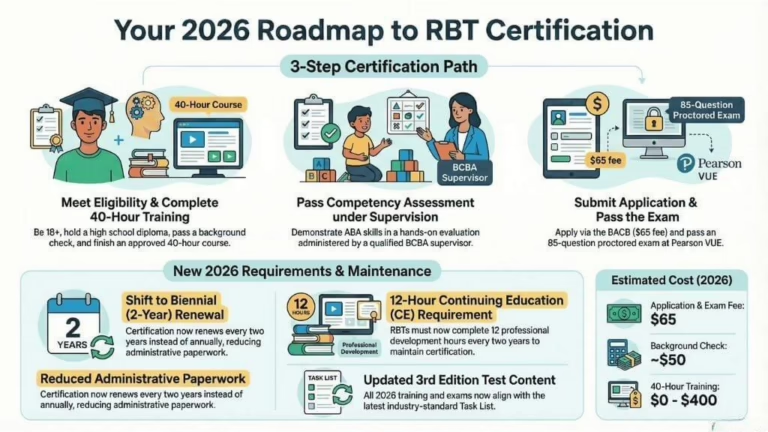
For Registered Behavior Technicians (RBTs), new employment requirements mandate that RBTs and their assessors must be affiliated with the same organization to ensure consistent and proper supervision. Furthermore, starting January 2026, only certified professionals (BCBAs or BCaBAs) will be authorized to supervise RBTs, eliminating the role of non-certified RBT supervisors and reinforcing high standards of professional oversight. Effective January 2025, a single certification policy means individuals can hold only one BACB credential at a time, clarifying professional roles within therapy teams.
The BACB is also revising its international credentialing policy. Beginning July 2024, residents of Ontario, Canada, will no longer be able to apply for new RBT or BCaBA certifications. By 2026, similar restrictions will extend to BCBA certification in Ontario. These changes underscore the BACB’s commitment to supporting localized certification standards, aiming to strengthen the global profession by fostering region-specific credentialing bodies.
Career Takeaway
These comprehensive updates signal the BACB’s dedication to ensuring that newly certified professionals are exceptionally well-prepared to meet the complex demands of modern ABA practice, both ethically and clinically. For aspiring BCBAs, it is imperative to align educational pursuits and supervised fieldwork with these evolving standards. Current BCBAs must stay vigilant regarding recertification policies and supervision requirements to maintain their credentials and uphold the integrity of the field.
The changes emphasize a greater focus on practical application, ethical considerations, and the continuous professional development necessary to protect clients and advance the quality of care. Professionals serious about advancing in ABA should proactively engage with these updates, ensuring their journey to certification and ongoing practice remains compliant and effective.
Fast Facts
| Key Point | Why It Matters for ABA |
|---|---|
| 6th Edition Test Content Outline (TCO) | New exam structure (Jan 2025) emphasizes real-world application, not rote memorization. |
| 175 discrete tasks across 9 domains | Expanded scope ensures comprehensive evaluation of advanced professional competencies. |
| 30-day reinstatement period | Encourages BCBAs/BCaBAs to maintain credentials proactively, effective Jan 2024. |
| Coursework expires after 10 years | Ensures candidates’ knowledge is current and relevant for modern practice. |
| Only certified professionals supervise RBTs | Elevates supervision standards and professional oversight, effective Jan 2026. |
| Ontario, Canada credentialing changes | Signifies a shift towards localized certification standards, impacting international applicants. |
Expert Perspective
These BACB updates reflect a critical evolution, ensuring BCBA certification remains a global benchmark for ethical and competent behavior analytic practice.
Source: abacentersfl.com