The Development
The Behavior Analyst Certification Board (BACB) has recently issued a series of important updates and new resources designed to keep certificants, applicants, and the broader applied behavior analysis (ABA) community informed about evolving professional standards and organizational developments. These announcements, detailed across recent newsletters, reports, and new guidance materials, underscore the BACB’s commitment to maintaining the integrity and growth of the profession.
Among the key announcements is the release of the February 2026 BACB Newsletter, which contains critical revisions to the BCBA Pathway 2 degree and coursework requirements. These changes are significant for aspiring Board Certified Behavior Analysts (BCBAs) and the academic institutions that prepare them, signaling an ongoing refinement of the qualifications necessary for certification. The newsletter also sheds light on the integral role of subject matter experts (SMEs) in shaping BACB certification practices, emphasizing a data-driven and evidence-based approach to credentialing. Furthermore, it provides essential guidance on navigating voluntary inactive status, offering flexibility for certificants who may need to temporarily step away from active practice.
A notable publication is the comprehensive “US Employment Demand for Behavior Analysts: 2010–2025” report. This in-depth analysis provides a 16-year overview of the demand for both BCBAs and Board Certified Assistant Behavior Analysts (BCaBAs) across the United States. The report offers crucial insights into the sustained growth and evolving landscape of the ABA job market, serving as a vital resource for career planning, workforce development, and strategic business decisions within the industry.
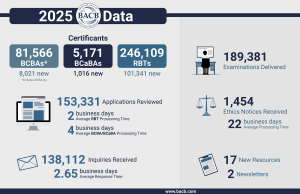
The BACB also released its “2025 Data Infographic,” offering a visual summary of how the organization continued to support the applied behavior analysis profession throughout the year. While specific metrics are not detailed in the announcement, such infographics typically highlight key operational data, reflecting the BACB’s efforts in certification, examination, and ethical oversight.
In terms of governance, the BACB announced the results of its recent Board of Directors election. Berenice de la Cruz, BCBA-D, was elected to serve a three-year term, bringing new perspectives to the board. Additionally, Sarah Richling, BCBA-D, was reappointed by the Board to serve a second term, ensuring continuity in leadership. These appointments are crucial for guiding the BACB’s strategic direction and upholding its mission.
To further support professional development and adherence to standards, the BACB introduced two new resources focused on supervised fieldwork requirements. These include “Making Sense of Fieldwork,” a new episode of the “Inside the BACB” podcast, and “Fieldwork: Getting It Right,” the latest BACB Blog post. These resources are designed to clarify complex aspects of supervised fieldwork, such as unrestricted hours and supervision protocols, emphasizing their importance in preparing competent and ethical behavior analysts.
Market Impact
These collective updates from the BACB have significant implications across the ABA industry. The revisions to BCBA Pathway 2 requirements will directly influence university curricula and the preparation of future behavior analysts, potentially leading to more standardized and rigorous academic programs. For current students and those considering a career in ABA, understanding these changes is paramount for successful certification.
The “US Employment Demand for Behavior Analysts” report provides invaluable data for clinic owners, private equity investors, and policymakers. The sustained 16-year trend of increasing demand for BCBAs and BCaBAs signals a robust and expanding market for ABA services, encouraging further investment in training programs and service provision. This data can also inform advocacy efforts for increased funding and insurance coverage, highlighting the critical need for qualified professionals to meet growing client demand.
The new fieldwork resources are particularly impactful for both trainees and supervisors. By clarifying requirements for unrestricted hours and supervision, the BACB aims to enhance the quality of practical training, ensuring that new certificants are well-prepared for the complexities of clinical practice. This clarity can reduce confusion, improve compliance, and ultimately elevate the standard of care provided to individuals receiving ABA services. For clinic owners, ensuring supervisors are well-versed in these guidelines is essential for maintaining ethical practice and avoiding potential compliance issues.
What’s Next
ABA professionals, including BCBAs, BCaBAs, RBTs, and clinic administrators, are strongly encouraged to actively engage with these new resources and stay abreast of ongoing BACB updates. Regularly reviewing the BACB newsletter, exploring the employment demand report, and utilizing the fieldwork guidance materials will be crucial for professional development, strategic planning, and maintaining compliance with evolving certification standards. The BACB’s continuous efforts to refine requirements and provide support underscore the dynamic nature of the ABA field and the importance of lifelong learning.
Fast Facts
| Key Point | Why It Matters for ABA |
|---|---|
| February 2026 Newsletter released | Details BCBA Pathway 2 changes, SME role, and inactive status guidance. |
| US Employment Demand Report (2010–2025) | Provides 16 years of data on BCBA/BCaBA demand, crucial for workforce planning. |
| New Fieldwork Resources (Podcast/Blog) | Clarifies supervised fieldwork requirements, enhancing trainee preparation and supervisor guidance. |
| Board of Directors Election Results | Introduces new leadership and ensures continuity in BACB governance. |
Expert Perspective
Staying informed about BACB updates is not just about compliance; it’s about actively shaping the future and quality of applied behavior analysis services.
Source: bacb.com